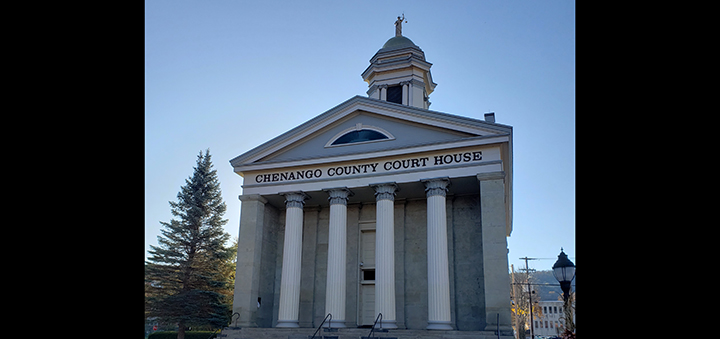
NORWICH – An advisory committee tasked with tracking the natural gas industry for Chenango County recently referred matters of safety, private water well testing and land reclamation methods to government standing committees.
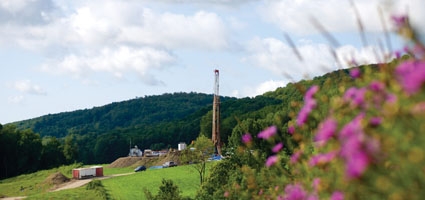
The referrals are just the latest on a long list delivered to supervisors, county officials and department heads since the committee was formed in 2008, well before the nation turned its attention to the massive quantities of gas within the Marcellus Shale and the reported environmental damages associated with hydraulic fracturing.
“We are way ahead of the other counties in getting things done,” said Chenango County Natural Gas Industry Consultant Steven Palmatier, who sits on the committee. (To read minutes and see a list of referrals, go to the Chenango County Planning Department website at
www.co.chenango.ny.us/Planning/NewPlanning.htm.)
Chenango County Board of Supervisors Chairman Richard B. Decker, R-N. Norwich, created the advisory committee after receiving numerous complaints from property owners about landmen’s aggressive leasing tactics and a legal challenge for permitting seismic testing along County Rd. 10A in Preston. At about the same time, many supervisors were taken aback upon learning that the county’s attorney and Decker had signed - without consulting town supervisors - a compulsory integration agreement in a Norse Energy Inc. spacing unit, also in Preston.
Norse Energy Inc., a Norwegian company that has offices in Buffalo, has 180,000 net acres of mineral rights in New York. In Chenango County, it has pipeline infrastructure that supports 28 active wells in Smyrna, six in Plymouth, and two in Preston. Norse commenced drilling this fall and projects seven more wells by the end of the year and 30 next year.
Much of the Natural Gas Advisory Committee’s focus has been on road usage, seismic testing, pipeline boring and driveway permitting along the county’s 8,000 plus acres of rights-of-way, 184 acres of which it owns outright. Discussions held and information gleaned has helped at least two towns create their own testing laws. At the county highway department, some energy companies’ permit conditions have been more thoroughly scrutinized, and one permit was actually revoked when a testing company failed to employ proper safety flags.
In the towns, the committee’s conversations have led to road use agreements with Norse Energy. Roads damaged due to heavy truck traffic have been repaired at the company’s expense. The highway superintendent in Plymouth, Peter Marshall, said the town “has a good working relationship with Norse.” The company paid the town to repair damages to the Boos Law Road, and road agreements have been drawn up for the South Road and Pigeon Hill Road.
Legally, towns have the authority to govern many aspects of road use, but the county does not. Members of the committee have repeatedly questioned the “right” to grant testing permits. Supervisor Peter C. Flanagan, D-Preston, who chairs the advisory committee, recently commented: “It’s not a question about the authority to grant a permit, but rather do we have the right? It becomes a property rights issue ... do we give companies the right to collect information on the minerals underneath the ground? We shouldn’t be doing this without consent of the landowners and mineral rights owners. I think it is unsettled law in New York. In Texas, it’s against the law.”